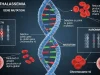

Two healthy people can carry a silent genetic condition for their entire lives and never know it—until they have a child together. That is how thalassemia works. Carriers typically feel well, have mild or no anemia, and are never flagged by routine checkups. Yet when two carriers start a family, the stakes shift dramatically.
Thalassemia is one of the most common inherited blood disorders on the planet. According to the World Health Organization, over 300,000 babies are born each year with severe hemoglobin disorders, with thalassemia accounting for a significant share. High carrier rates are found across Southeast Asia, the Mediterranean, the Middle East, South Asia, and parts of Africa—regions where the carrier trait historically offered a survival advantage against malaria.
This guide explains the thalassemia carrier couple risk in full. You will learn how the thalassemia inheritance pattern works, what the statistics actually mean for your family, how thalassemia carrier screening is done, and what reproductive options exist when both partners test positive. The goal is not to alarm—it is to equip you with the information that makes a real difference.
What Is Thalassemia and What Does Carrier Status Mean?
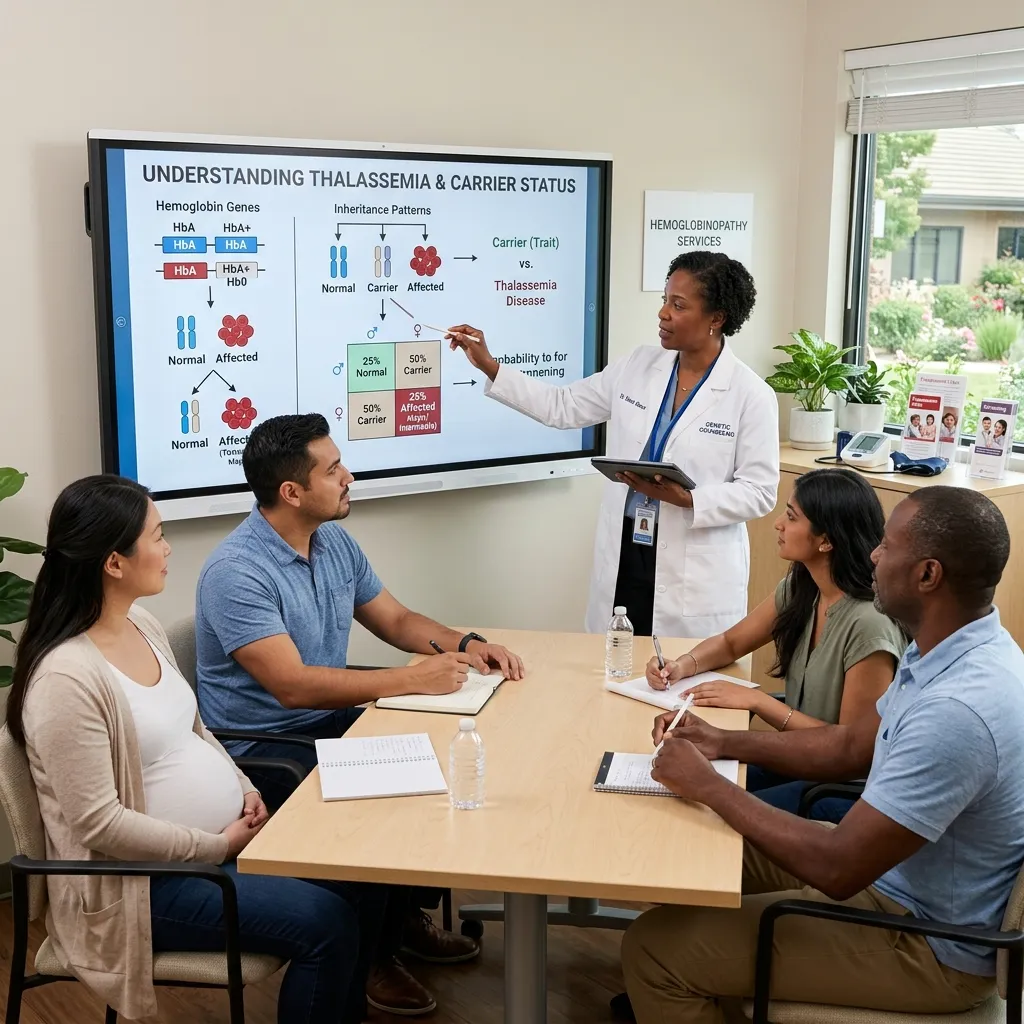
Understanding Thalassemia
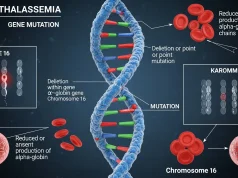
Thalassemia is a group of inherited blood disorders caused by reduced or absent production of globin protein chains—the building blocks of hemoglobin. Hemoglobin is the molecule inside red blood cells that carries oxygen from your lungs to every tissue in your body. When globin chain production is disrupted, red blood cells become unstable, break down prematurely, and cause anemia ranging from mild to life-threatening.
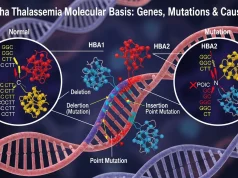
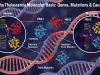
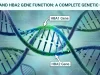
There are two main types: alpha thalassemia, which involves the HBA1 and HBA2 genes on chromosome 16, and beta thalassemia, which involves the HBB gene on chromosome 11. Both follow the same fundamental inheritance rules, but the number of genes involved differs. You can read more about the genetic foundation of alpha thalassemia in our detailed guide on HBA1 and HBA2 gene function.
What Is a Thalassemia Carrier?
A carrier—also called someone with thalassemia trait or thalassemia minor—inherits one affected gene and one normal gene. Most carriers have mild anemia or none at all. Their red blood cells may be slightly smaller than average, which is sometimes mistaken for iron deficiency, but their overall health is rarely affected.
The critical point: carriers can pass the affected gene to their children. When both parents are carriers, the risk of having a severely affected child becomes real and statistically significant.
Why Thalassemia Carrier Couple Risk Is a Crucial Topic
A single carrier partnering with a non-carrier faces very limited reproductive risk. The math changes completely when two carriers form a couple. Every pregnancy they have carries defined genetic probabilities. Understanding those probabilities—before conceiving—is the foundation of informed family planning.
The Thalassemia Inheritance Pattern Explained
Autosomal Recessive Inheritance
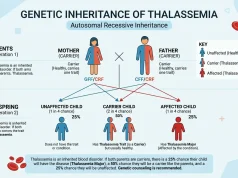
Thalassemia follows an autosomal recessive inheritance pattern. “Autosomal” means the affected genes sit on the numbered chromosomes (1 through 22), not the sex chromosomes. This means thalassemia affects males and females equally. “Recessive” means a person must inherit two affected copies of the relevant gene—one from each parent—to develop the disease. Inheriting just one copy usually produces only carrier status.
For a deeper dive into how this inheritance pattern operates across different thalassemia types, see our complete guide on thalassemia inheritance pattern explained.
Alpha vs. Beta Thalassemia: How the Genetics Differ
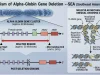
Alpha thalassemia is more genetically complex. Most people carry four alpha-globin genes (two HBA1 and two HBA2 copies). Severity depends on how many of those four genes are deleted or mutated. Even when both parents carry the same number of deleted genes, the arrangement of those deletions on each chromosome matters enormously. A parent carrying a double-gene deletion on one chromosome (–/αα) puts children at higher risk of severe disease than a parent with single deletions on separate chromosomes (-α/-α). For more on how gene deletions occur at the molecular level, our guide on the alpha globin gene deletion mechanism covers this in detail.
Beta thalassemia is governed by two copies of the HBB gene—one from each parent. Carriers inherit one normal and one mutated HBB copy. When both parents are beta thalassemia carriers, the inheritance mathematics produce three possible outcomes per pregnancy.
The Risk of Having a Child with Thalassemia When Both Parents Are Carriers
This is the number that matters most for a thalassemia carrier couple. When both parents carry the same type of thalassemia, each pregnancy produces three possible outcomes:
- 25% chance the child inherits two normal genes and is completely unaffected
- 50% chance the child inherits one normal and one affected gene, becoming a carrier—just like the parents
- 25% chance the child inherits two affected genes and develops a more severe form of thalassemia
These odds apply independently to every single pregnancy. Having one unaffected child does not reduce the risk for the next. A couple could have three unaffected children and then one severely affected child. The 25% figure describes probability per conception, not a guaranteed distribution within a family.
When Only One Parent Is a Carrier
When just one parent is a carrier, the risk profile changes significantly. Children face a 50% chance of being carriers themselves and a 50% chance of inheriting two normal genes. In most thalassemia types, having only one affected gene does not cause severe disease. This scenario is far less clinically urgent—though carriers in that generation still need to understand their own status for future family planning.
Thalassemia Carrier Screening: Who Needs It and How It Works
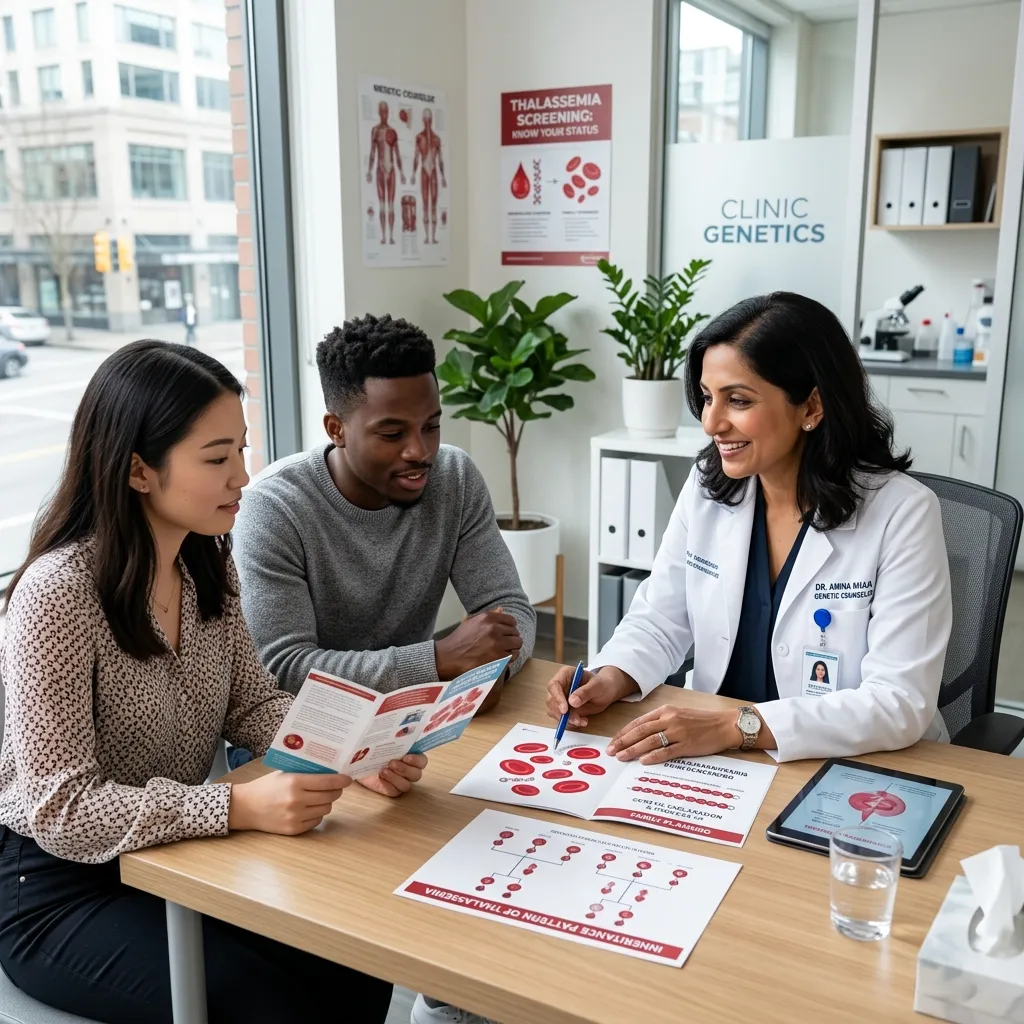
Who Should Be Screened?
Thalassemia carrier screening is recommended for:
- Individuals from high-prevalence regions, including Southeast Asia, South Asia, the Mediterranean, the Middle East, and sub-Saharan Africa
- Anyone with unexplained microcytic anemia (small red blood cells) after iron deficiency has been ruled out
- Couples planning a pregnancy, particularly when one or both partners have a family history of anemia, thalassemia, or blood disorders
- Pre-marital couples in countries with national screening programs (mandatory or voluntary)
Screening before conception offers the greatest advantage. Couples who learn their carrier status before pregnancy have the widest range of options and the most time to consider them.
How Is Thalassemia Carrier Screening Done?
Screening typically follows a layered approach:
1. Complete Blood Count (CBC)
The first step for most people. A CBC measures red blood cell size (MCV) and hemoglobin content (MCH). Carriers often show smaller-than-normal red blood cells—a pattern called microcytosis—though a normal CBC does not definitively rule out carrier status.
2. Hemoglobin Electrophoresis / HPLC
High-Performance Liquid Chromatography (HPLC) or hemoglobin electrophoresis identifies the types and proportions of hemoglobin in the blood. In beta thalassemia carriers, HbA2 is typically elevated above 3.5%. In alpha thalassemia carriers, results can appear entirely normal—which is why this test alone is insufficient for alpha thalassemia diagnosis.
3. Molecular Genetic Testing
Genetic testing is the gold standard. Methods such as Gap-PCR, MLPA (Multiplex Ligation-dependent Probe Amplification), and Next-Generation Sequencing directly analyze the relevant genes. Molecular testing identifies the precise mutation or deletion involved—information that is essential when both partners test positive, because the type of mutation determines the actual risk level for each pregnancy.
How to Interpret Your Screening Results
A positive carrier result does not mean you or your partner is unwell. It means your genetic status matters in the context of family planning. The next step after a positive result is not alarm—it is genetic counseling.
Genetic Counseling for Thalassemia Carrier Couples
What Is Genetic Counseling?
Genetic counseling is a consultation with a trained healthcare professional—typically a medical geneticist or a certified genetic counselor—who explains your carrier status, interprets molecular test results, maps out the specific risk for each pregnancy, and discusses available reproductive options without pressure or judgment.
Why Genetic Counseling Matters for Carrier Couples
For a thalassemia carrier couple, genetic counseling transforms abstract statistics into a personal plan. A counselor can explain whether your specific mutation combination puts you at the full 25% risk, a modified risk, or in some alpha thalassemia scenarios, an even higher risk if both partners carry double-gene deletions. Counselors also connect families with support networks and help them navigate emotionally complex decisions.
According to the World Health Organization, expanded genetic counseling programs can significantly reduce the incidence of severe thalassemia births in high-prevalence populations.
Reproductive Options for Thalassemia Carrier Couples

Knowing the risk is the first step. Acting on that knowledge involves understanding the full range of reproductive options available.
Natural Conception with Prenatal Diagnosis
Many carrier couples choose to conceive naturally and use prenatal diagnosis to determine whether the pregnancy has been affected. Two main procedures are available:
Chorionic Villus Sampling (CVS)
CVS is performed between weeks 10 and 13 of pregnancy. A small sample of placental tissue is taken and analyzed for the specific thalassemia mutations carried by both parents. Results are typically available within one to two weeks.
Amniocentesis
Amniocentesis is performed between weeks 15 and 20. Amniotic fluid containing fetal cells is extracted and tested. Both CVS and amniocentesis carry a small procedural risk—approximately 0.5–1%—of pregnancy complications including miscarriage. Couples should discuss these risks with their obstetrician and genetic counselor before deciding.
Preimplantation Genetic Diagnosis (PGD) with IVF
PGD combined with in vitro fertilization (IVF) allows embryos to be tested for thalassemia mutations before they are transferred to the uterus. Only unaffected embryos or carrier embryos are selected for implantation. This option eliminates the need to make decisions after a positive prenatal diagnosis result, but it requires a full IVF cycle—a demanding process with significant financial and emotional costs.
PGD is the preferred choice for couples who want to avoid the possibility of pregnancy termination after a positive prenatal result. Success rates depend on age and embryo quality, and multiple cycles may be needed.
Donor Gametes
Couples may choose to use donor eggs or donor sperm from a screened, non-carrier donor. This eliminates the genetic risk entirely for the child but means one parent will not be genetically related to the child. Reputable donor programs screen all donors for thalassemia and other inherited conditions.
Adoption
Adoption is a meaningful path for couples who choose not to pursue biological parenthood. It removes genetic risk entirely and provides a child with a permanent, loving home. The adoption process varies significantly by country and region.
Living with Thalassemia: What It Means for an Affected Child
 Understanding the broader picture matters when couples are weighing their options. The severity of thalassemia in an affected child depends entirely on which mutations were inherited.
Medical Management
Children born with beta thalassemia major require regular blood transfusions—typically every three to four weeks—from early childhood for the rest of their lives, alongside iron chelation therapy to prevent organ damage from iron overload. Hemoglobin H disease (a severe form of alpha thalassemia involving three affected genes) requires monitoring and sometimes periodic transfusions. Bone marrow or stem cell transplantation can cure severe thalassemia in eligible patients. Gene therapy research is advancing rapidly, offering genuine hope for a future one-time treatment. For global guidance on management, the Centers for Disease Control and Prevention provides up-to-date resources.
Quality of Life
With proper treatment and monitoring, many people with thalassemia major lead full lives. School, relationships, careers, and meaningful daily activities remain accessible. The emotional and logistical burden on families is real, but it is manageable with the right support systems in place. Our family planning thalassemia guide covers how families navigate both the medical and practical dimensions of a thalassemia diagnosis.
Glossary of Key Terms
- Carrier (thalassemia trait/minor): A person with one affected thalassemia gene. Usually asymptomatic or mildly anemic.
- Autosomal recessive: A genetic inheritance pattern requiring two affected gene copies for disease expression.
- HBA1 / HBA2: The two alpha-globin genes located on chromosome 16.
- HBB: The beta-globin gene located on chromosome 11.
- Hemoglobin electrophoresis / HPLC: Laboratory tests that identify abnormal hemoglobin types.
- Chorionic Villus Sampling (CVS): A prenatal diagnostic procedure performed in the first trimester.
- Amniocentesis: A prenatal diagnostic procedure performed in the second trimester.
- Preimplantation Genetic Diagnosis (PGD): Genetic testing of embryos created through IVF before uterine transfer.
- Chelation therapy: Treatment to remove excess iron from the body following repeated blood transfusions.
- MLPA: Multiplex Ligation-dependent Probe Amplification—a molecular test used to identify gene deletions.
Conclusion
Being a thalassemia carrier does not define your health, your future, or your family’s story. The thalassemia carrier couple risk is real, but so is the ability to act on it with clarity and purpose. Thalassemia carrier screening identifies your status early. The thalassemia inheritance pattern makes the mathematics of each pregnancy predictable. And with that knowledge, couples can choose from a range of reproductive options that align with their values, circumstances, and goals.
Every option begins with a conversation—with a doctor, a genetic counselor, or a specialist who understands both the genetics and the human side of this decision. If you or your partner has been identified as a thalassemia carrier, the most valuable next step is scheduling a genetics consultation before your next pregnancy. The earlier you seek information, the broader your choices remain.
Frequently Asked Questions
1. What exactly does it mean to be a thalassemia carrier?
A thalassemia carrier is a person who inherits one affected thalassemia gene and one normal gene. Carriers are typically healthy, with mild or no anemia. The condition is sometimes called thalassemia trait or thalassemia minor. Carriers can pass the affected gene to their children, which is why carrier status becomes medically important when planning a family.
2. How common is thalassemia in different populations?
Thalassemia carriers are most common in Southeast Asia, South Asia, the Mediterranean, the Middle East, and parts of Africa. According to the World Health Organization, thalassemia and related hemoglobin disorders affect millions of people globally, with hundreds of thousands of severe cases born each year. Carrier rates in some Southeast Asian and Mediterranean populations exceed 5–10%.
3. If both my partner and I are thalassemia carriers, what are the exact chances of having an affected child?
When both partners are thalassemia carriers, each pregnancy carries a 25% chance of a severely affected child, a 50% chance of producing another carrier, and a 25% chance of a completely unaffected child. These probabilities apply independently to every pregnancy—past outcomes do not influence future ones.
4. Is thalassemia carrier screening mandatory?
Screening requirements vary by country. Several countries with high carrier rates—including Cyprus, Greece, Iran, and parts of the Middle East—operate mandatory or strongly encouraged pre-marital or pre-conception screening programs. In most Western countries, screening is recommended but voluntary, particularly for individuals from high-prevalence ethnic backgrounds.
5. What is the difference between alpha and beta thalassemia in terms of inheritance risk?
Beta thalassemia involves one gene per chromosome copy, making the two-carrier inheritance risk straightforward (25/50/25). Alpha thalassemia involves four genes in total. The specific arrangement of gene deletions on each chromosome can change the risk significantly—particularly when one parent carries a double-gene deletion on a single chromosome, which can increase the risk of the most severe form, Hemoglobin Bart’s hydrops fetalis.
6. Can thalassemia be cured?
Bone marrow or stem cell transplantation can cure severe thalassemia in eligible patients, particularly children with a matched sibling donor. Gene therapy is an active area of research and has shown promising early results in clinical trials. Most forms of thalassemia cannot yet be cured through standard treatment, but symptoms can be well managed with transfusions and iron chelation.
7. What is genetic counseling, and do carrier couples need it?
Genetic counseling is a consultation with a trained specialist who explains carrier status, interprets molecular test results, and helps couples understand their specific pregnancy risks and reproductive options. All thalassemia carrier couples benefit from genetic counseling—especially before their first pregnancy. Counselors provide facts, not pressure, and tailor information to each couple’s specific mutations and situation.
8. What are the risks of prenatal diagnosis procedures like CVS or amniocentesis?
Both procedures carry a small risk of pregnancy complications. Chorionic Villus Sampling, performed in the first trimester, carries an estimated 0.5–1% risk of miscarriage. Amniocentesis, performed in the second trimester, carries a similar or slightly lower risk. Results from both procedures are highly accurate. Couples should discuss these risks with their obstetrician and genetic counselor to make an informed decision.
9. Are there support groups for families affected by thalassemia?
Yes. Organizations including the Thalassemia International Federation (TIF), the Cooley’s Anemia Foundation, and various regional patient advocacy groups offer resources, community forums, and peer support for patients and families. Connecting with others who share the diagnosis often reduces the sense of isolation that can accompany a new or unexpected genetic finding.
10. Where can I find more reliable information about thalassemia?
Trusted sources include the World Health Organization (who.int), the Centers for Disease Control and Prevention (cdc.gov/ncbddd/thalassemia), and the Thalassemia International Federation (thalassaemia.org). Your hematologist or genetic counselor is also a key resource for information specific to your mutation type and family situation.